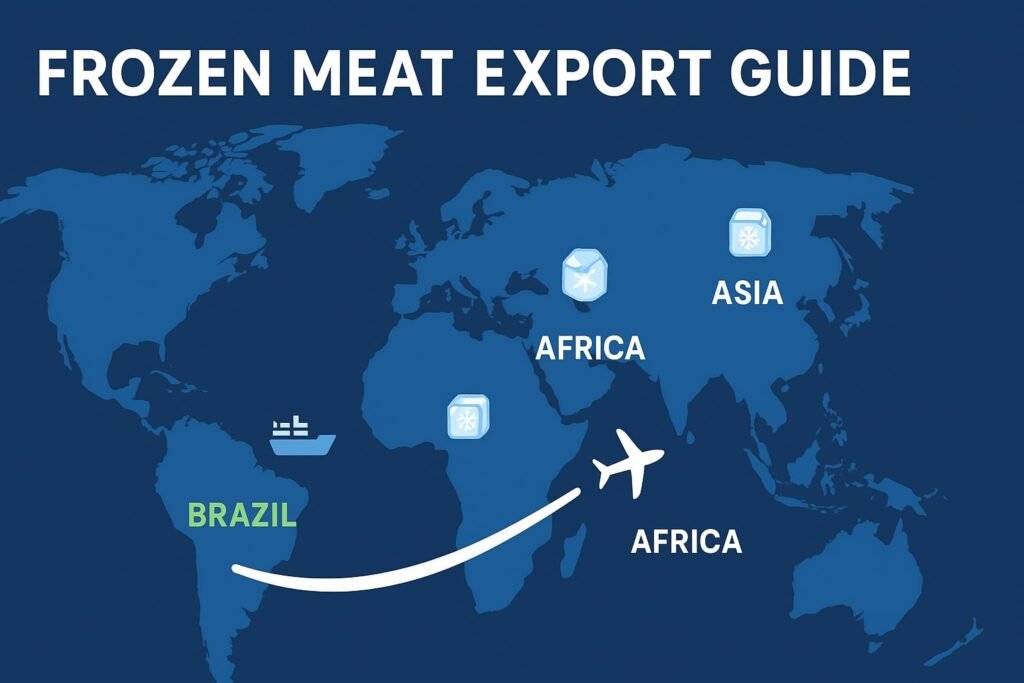
The global food industry is defined by two key factors: supply and trust. In the world of meat exports, no country exemplifies both better than Brazil. Year after year, the South American nation has reinforced its position, transforming the term Brazil Poultry Exports into a global benchmark for quality, volume, and reliability. Today, when a wholesaler in the Middle East, a retailer in Asia, or a distributor in Europe seeks high-quality frozen poultry, the first name on the list is almost always Brazil.
But how did a country, thousands of miles from some of its biggest markets, achieve and maintain this undisputed dominance? The story is one of strategic investment, unparalleled natural advantages, and an unwavering commitment to international safety and ethical standards. This comprehensive market overview explores the multifaceted factors that have propelled the Brazilian poultry industry to the top.
1. The Unrivaled Competitive Edge: Natural Resources and Efficiency
Brazil’s success begins with its vast, fertile land—a geographical gift that competitors simply cannot replicate on the same scale.
The Power of Agricultural Self-Sufficiency
The foundation of low-cost, high-volume poultry production is feed. Unlike many global competitors who rely on costly imports, Brazil is a leading global producer of the two primary ingredients in chicken feed: corn and soybeans.
This agricultural self-sufficiency provides a massive economic advantage:
-
Lower Production Costs: Domestic feed sources shield the Brazilian poultry industry from the volatility of global commodity markets, allowing producers to offer more competitive pricing for their exported products.
-
Supply Chain Stability: Controlling the feed supply guarantees consistent quality and availability, which is vital for maintaining the enormous scale of Brazil Poultry Exports. The birds are fed the best, consistently, leading to uniform quality in the final Brazilian frozen chicken product.
Vast Scale and Ideal Climate
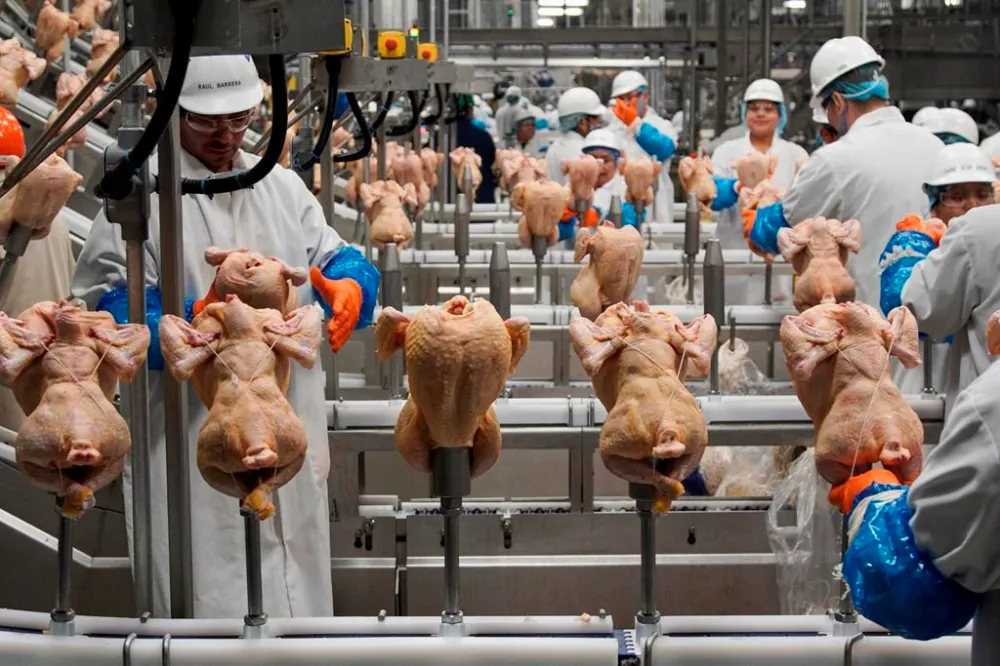
Brazil’s expansive rural areas allow for the efficient, large-scale integration of feed production, rearing facilities, and processing plants. The tropical and sub-tropical climate is also generally favorable for poultry farming. Combined, these factors create a highly efficient, vertical integration model that minimizes transit times and logistical friction between the farm and the final processing plant, ensuring maximum freshness is locked in via blast-freezing.
2. The Cornerstone of Trust: Biosecurity and Safety Standards
In the high-stakes world of global food trade, confidence in product safety is paramount. Brazil’s ability to build and maintain trust with over 150 importing nations is a crucial driver of its dominance.
An Exceptional Biosecurity Record
One of the most significant factors that differentiate Brazil Poultry Exports is the country’s exceptional biosecurity record. Brazil has maintained its status as being largely free from major, devastating poultry diseases (such as Avian Influenza), which are endemic in other major exporting regions.
This clean health record is not accidental. It is the result of strict government oversight, rigorous internal controls by producers, and a vast geographic separation between farms. This “disease-free” status makes Brazilian frozen chicken the preferred safe choice for countries looking to minimize import risks and protect their own domestic herds.
The Halal Advantage: Compliance and Market Access
A significant portion of the global demand for poultry comes from Islamic markets in the Middle East, North Africa, and Southeast Asia, where Halal certified poultry is mandatory. Brazil has strategically positioned itself as the world’s most reliable supplier of these products.
-
Dedicated Certification: Brazilian processing plants undergo comprehensive certification processes supervised by accredited Islamic bodies.
-
Cultural Commitment: The commitment to Halal standards is deep-seated, ensuring that all production aspects—from the humane treatment of the animals to the precise method of slaughter and packaging—comply strictly with Islamic dietary laws.
This dedication to providing certified, premium Halal certified poultry gives Brazilian suppliers access to lucrative, high-demand markets that are often closed to non-certified competitors, further solidifying Brazil’s global market share.
3. A Symphony of Logistics: Mastering the Cold Chain
Producing millions of tons of poultry is one challenge; shipping it across oceans to different continents while maintaining perfect quality is another entirely. The modern logistics network supporting Brazil’s poultry exports is nothing short of a marvel.
State-of-the-Art Infrastructure
Brazilian ports and shipping lines have invested heavily in infrastructure dedicated to frozen food exports:
-
Reefer Container Availability: A massive fleet of refrigerated (reefer) containers is maintained and deployed specifically for meat exports.
-
Efficient Port Operations: Major export hubs like Santos and Paranaguá have streamlined processes for handling temperature-controlled cargo, minimizing dwell time and exposure to external temperatures.
The entire process, from the flash-freezing at the plant to the loading onto a refrigerated vessel, is meticulously managed under a reliable cold chain logistics system. This ensures that the final product, be it a container of chicken feet to China or a bulk order of chicken breasts to Europe, arrives at the buyer’s doorstep in pristine, market-ready condition.
4. Product Diversity and Global Market Responsiveness
The Brazilian poultry industry is known for its agility in adapting to diverse global demands. They do not just export chicken—they export precisely what each region requires.
-
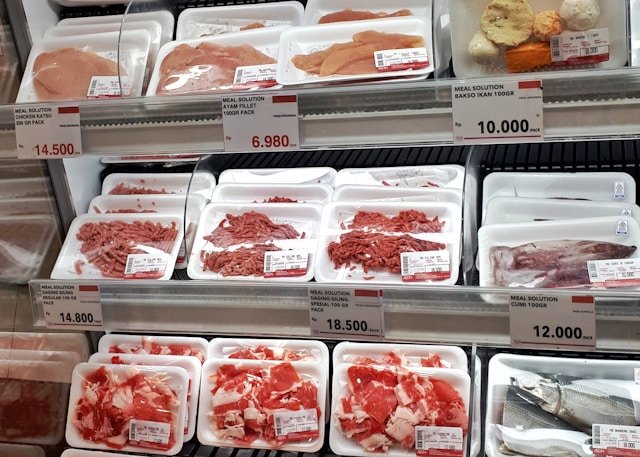
Wide Range of Cuts: Unlike markets that focus only on fillets or wings, Brazil exports everything. They supply whole chicken grillers for family retail, specific cuts like thighs and drumsticks for foodservice, and high-value anatomical parts like chicken paws and feet for Asian cuisine.
-
Custom Packaging: Suppliers work with bulk buyers to provide specific vacuum-packed, IQF (Individually Quick Frozen), or custom-weight carton options. This flexibility is a critical advantage for wholesalers and retailers managing complex supply chains.
The responsiveness of major Brazilian poultry suppliers ensures that they are seen not just as sellers, but as long-term, strategic partners capable of handling the most demanding and customized bulk orders. For businesses looking for a reliable, comprehensive product catalogue, companies listed on platforms like Brazil Poultry Exports provide a clear pathway to securing this world-class supply.
Conclusion: Securing the Future of Brazil Poultry Exports
Brazil’s trajectory as the world leader in poultry exports is built upon a solid tripod of advantages: natural competitive efficiency, unwavering safety and religious compliance, and superior logistical execution.
As global demand for affordable, high-quality, and certified meat continues to rise, the Brazilian poultry industry is uniquely positioned to capitalize on this growth. Its continuous investment in technology, biosecurity, and cold chain management assures partners worldwide that they are working with the best in the business.
For wholesalers, retailers, and distributors, partnering with an established exporter of Brazilian poultry is the smart move to ensure a consistent, safe, and competitive supply for years to come. The era of Brazil Poultry Exports is just beginning.