The Halal Gold Standard: Why Brazil’s Rigorous Certification Process Guarantees Trust 🥇
The global demand for Halal-certified products is massive, representing a market valued in the trillions. Yet, for global importers, securing a reliable and authentic supply goes beyond simply looking for a label; it requires partnering with a country that has embedded Halal compliance into its national infrastructure.
As the world’s leading exporter of poultry, Brazil has not just embraced the Halal requirements of its primary markets in the Middle East, Asia, and Africa—it has refined them. The nation has developed a sophisticated, multi-layered system that transcends religious compliance to become a global mark of quality, hygiene, and traceability. This system is what we call the Halal Gold Standard.
For wholesalers, retailers, and distributors looking to source high-quality frozen proteins, understanding the depth of Brazil’s Rigorous Certification Process is crucial for ensuring the integrity of your supply and the satisfaction of your customers.
Brazil: The Uncontested Halal Meat Export Giant
Brazil has earned its title as the Halal meat export giant through decades of strategic investment and cooperation between government bodies, industry leaders, and accredited Islamic certification agencies.
Brazil exports chicken to over 150 countries, and roughly half of its total poultry production is specifically certified as Halal. This monumental scale is built on a commitment to consistency.
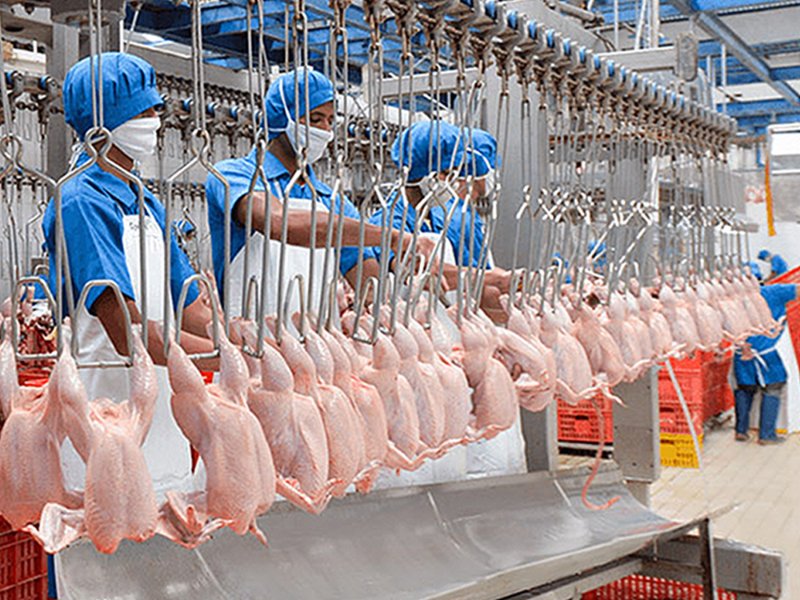
Unlike many suppliers who may treat Halal as an added feature, Brazilian meatpackers often adapt entire production lines and even facilities to be Halal-dedicated. This strategic focus ensures two critical outcomes for importers:
-
Guaranteed Volume: Brazil’s production capacity can reliably meet massive, long-term contractual demands.
-
Guaranteed Compliance: The sheer volume dictates that the standards must be non-negotiable and strictly maintained at all times, making Brazilian Halal poultry exports the most reliable in the world.
Defining the Halal Gold Standard: More Than a Ritual
The Halal certification standard is often mistakenly viewed only through the lens of ritual slaughter (Dhabīḥah). While the Dhabīḥah method—performed by a Muslim slaughterman, with a precise, swift cut to the jugular vein, windpipe, and esophagus, and a dedication toward Mecca—is central, the Halal Gold Standard covers the animal’s entire lifespan and journey.
In Brazil, Halal compliance means adherence to a comprehensive list of requirements established by Islamic jurisprudence (Shariah), including:
-
Animal Welfare: Animals must be healthy, well-nourished, and treated humanely prior to slaughter to minimize stress.
-
Facility Purity: The processing plant must maintain complete segregation from non-Halal production areas. This means separate equipment, storage facilities, and even dedicated staff schedules to prevent cross-contamination.
-
Ingredient Vetting: Any additives, preservatives, or processing aids used in marinated or prepared products must be thoroughly vetted to ensure they contain no Haram (forbidden) ingredients, such as alcohol or pork derivatives.
This holistic approach is why the Halal certification standard provides a level of quality assurance that appeals to discerning non-Muslim consumers as well.

The Multi-Stage Audit: Brazil’s Rigorous Certification Process in Detail
Gaining Halal certification in Brazil is a stringent process that typically involves two internationally recognized certification bodies:
-
FAMBRAS (Federação das Associações Muçulmanas do Brasil)
-
CDIAL Halal (Centro de Divulgação do Islã Para América Latina)
These organizations are accredited by major importing nations (such as the Gulf Cooperation Council, Indonesia, and Malaysia) and deploy teams composed of both religious auditors and technical auditors to monitor every step.
Step 1: Farm and Feed Vetting
The process begins at the source. Auditors review feed composition, ensuring it is free from non-permissible ingredients. They also verify animal husbandry practices, confirming the animals’ welfare standards meet Halal requirements.
Step 2: The Slaughter Floor (Dhabīḥah)
This is the most critical checkpoint. A Muslim slaughterman, approved by the certification body, is permanently stationed on the line. The auditor verifies:
-
The sharpness of the blade to ensure a swift, clean cut.
-
The direction of the animal (towards Mecca).
-
That the required invocation is recited prior to the procedure.
-
That the animal is alive and healthy at the time of slaughter.
Step 3: Production Segregation and Hygiene
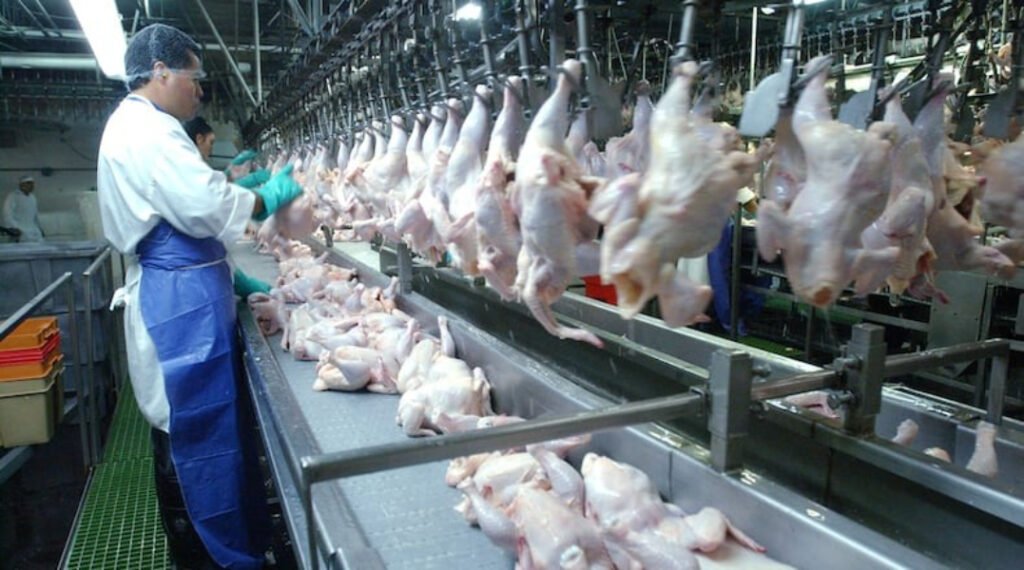
Following slaughter, the strict segregation rules kick in. The Halal line must be entirely separate from any non-Halal meat processing. This includes:
-
Dedicated conveyors, cutting tools, and cold rooms.
-
Intense, documented cleaning and sanitation protocols between shifts.
Step 4: Storage, Packaging, and Transport
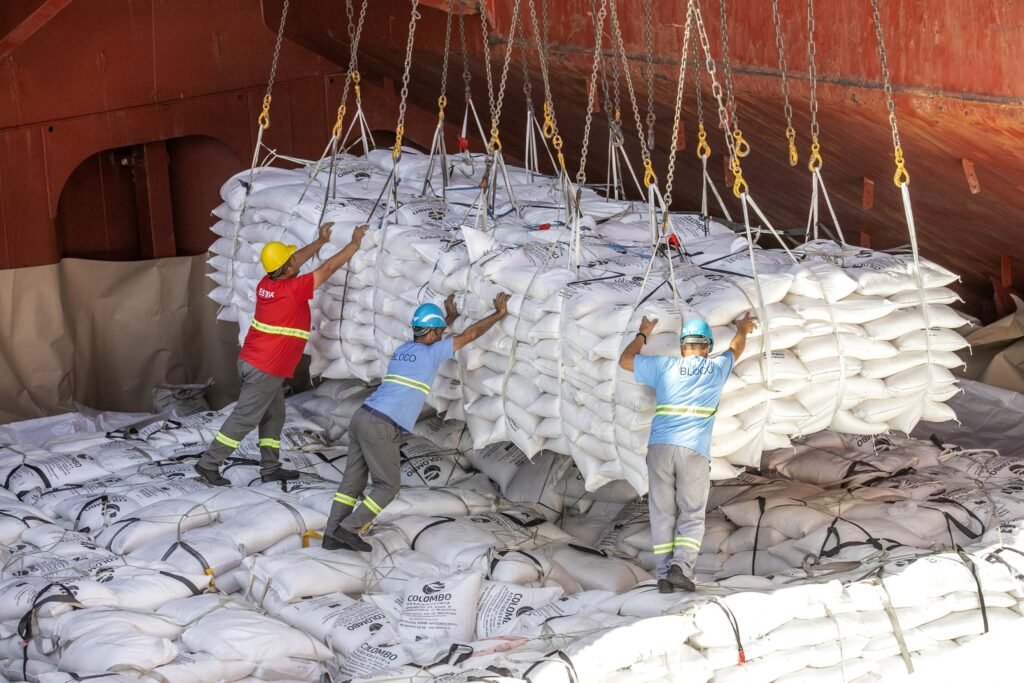
The final steps guarantee the product’s integrity until it reaches the destination port. Packaging materials must be Halal-compliant, and the final frozen product must be stored in segregated cold stores.
Protecting the Product: Halal Supply Chain Integrity
For frozen poultry exports, maintaining the cold chain is paramount. Brazil’s world-class logistics infrastructure and adherence to the Halal supply chain integrity principle provide an essential layer of security for global buyers.
The certificate does not end at the factory door; it extends to the refrigerated containers. Brazilian exporters utilize state-of-the-art blast freezing technology to rapidly reduce the product temperature, locking in freshness, taste, and nutritional value for a guaranteed long shelf life.
Temperature Monitoring and Traceability Modern export processes often include advanced traceability systems. From the moment the frozen chicken is placed into the container, its temperature is digitally monitored and recorded. This complete visibility means importers know that the Halal-certified quality they ordered has been preserved throughout the long sea journey.
If you are looking for reliable and high-quality frozen chicken exporter services that adhere to these strict standards, you can find a wide range of premium products and customized solutions here: frozen chicken exporter services.
Tapping into the Global Halal Market: A Universal Seal of Quality
The Halal sector is growing rapidly across the world, not just in Muslim-majority nations. Analysts project the value of the Global Halal market to continue its explosive growth into the next decade.
However, a fascinating trend is emerging: non-Muslim consumers, particularly in Europe and North America, are increasingly seeking out Halal-certified products. Why? Because the Halal stamp has become synonymous with several universally valued attributes:
-
Higher Animal Welfare Standards: The requirement to minimize animal suffering appeals to ethically conscious buyers.
-
Superior Hygiene: The exhaustive segregation and cleaning protocols mandated by Halal certification are often seen as exceeding basic regulatory standards.
-
Purity of Ingredients: The rigorous vetting process for all inputs guarantees a pure, untainted final product.
By importing products that meet Brazil’s Rigorous Certification Process, buyers are not just catering to the Muslim population; they are accessing a broader consumer base that values verifiable quality and ethical production.
Conclusion: Partnering with a Trusted Halal Supplier
Brazil’s commitment to the Halal Gold Standard is an economic decision as much as a principled one. By rigorously enforcing standards across production, processing, and cold-chain logistics, the country maintains its undisputed position in the Global Halal market.
For international importers, this system means more than just compliance; it means guaranteed quality, supply chain reliability, and a competitive edge in serving the world’s fastest-growing consumer segments. When you choose Brazilian products, you are partnering with a nation that has invested decades in becoming the world’s most Trusted Halal supplier.
The trust is built into every step, ensuring that the Brazilian Halal poultry exports that arrive at your port are exactly what your customers expect: premium quality, perfectly compliant, and ready to meet the demands of a global market.