Understanding the Meaning of “Halal” in Global Poultry Trade
In today’s interconnected food market, trust and compliance are as critical as taste and price. For importers and distributors sourcing poultry from global suppliers, understanding the certification process for frozen poultry—especially halal-certified products—is essential to maintaining market credibility and consumer confidence.
The term “halal” in Arabic means “permissible.” It defines what is lawful for consumption according to Islamic dietary laws. When applied to poultry, it means the meat has been prepared in accordance with specific religious guidelines—covering animal welfare, slaughtering methods, hygiene, and processing.
For Muslim consumers, halal is not just a label; it’s a guarantee of faith, purity, and ethical production. For international buyers, it’s a gateway to trust and expanded market access, especially across regions like the Middle East, North Africa, and Southeast Asia, where halal certification is a prerequisite for import approval

Why Halal Certification Matters for Frozen Poultry Exporters
Global demand for halal food is growing exponentially. According to Statista, the global halal food market is projected to surpass US$2 trillion by 2027, driven by Muslim populations and non-Muslim consumers alike who associate halal with cleanliness, traceability, and quality assurance.
For exporters like Brazil Poultry Exports, obtaining and maintaining halal certification is not optional—it’s a hallmark of global professionalism and respect for diverse market standards.
Here’s why halal certification is a key differentiator in the certification process for frozen poultry:
- Market Access: Many importing countries—such as Saudi Arabia, UAE, Malaysia, Indonesia, and Egypt—require official halal certification for poultry imports.
- Consumer Trust: Certification signals compliance with religious and ethical values.
- Quality Assurance: The certification process ensures top hygiene, humane handling, and rigorous inspection protocols.
- Brand Reputation: For exporters, it reinforces transparency and credibility on the global stage.
The Certification Process for Frozen Poultry: Step-by-Step Overview
Let’s break down how the halal certification process for frozen poultry works, from farm to export container.
1. Farm-Level Compliance
It all starts with responsible farming. Poultry used in halal production must be raised under healthy, humane conditions. Birds must be free from prohibited feed ingredients such as animal by-products, blood meal, or any non-halal substances.
Brazil Poultry Exports partners exclusively with certified farms that adhere to strict hygiene, biosecurity, and animal welfare standards. The goal is to ensure that the poultry is wholesome, traceable, and ready for halal processing.
2. Slaughter According to Islamic Guidelines
This is the most critical step in the certification process for frozen poultry. According to Islamic law, each bird must be slaughtered individually by a qualified Muslim slaughterman. During slaughter, the name of Allah (Bismillah Allahu Akbar) must be invoked before the cut is made.
The knife used must be sharp, and the cut should swiftly sever the trachea, esophagus, and jugular veins to ensure minimal pain to the animal. The bird must be alive and healthy at the time of slaughter, and all the blood must be completely drained from the carcass before further processing.
3. Inspection and Documentation
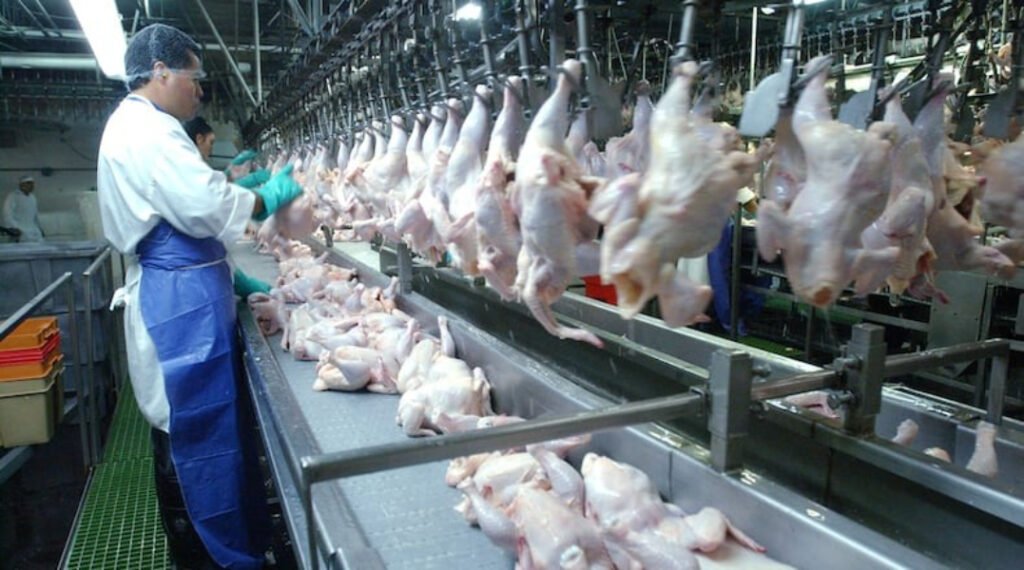
After slaughter, certified halal inspectors monitor every step—from bleeding and plucking to evisceration and chilling—to ensure compliance with Islamic and hygiene standards. These inspectors are typically authorized by recognized halal certification bodies.
Each batch of poultry that passes inspection receives a unique identification code linking it to its halal certificate. This ensures full traceability and accountability throughout the supply chain.
4. Processing and Freezing
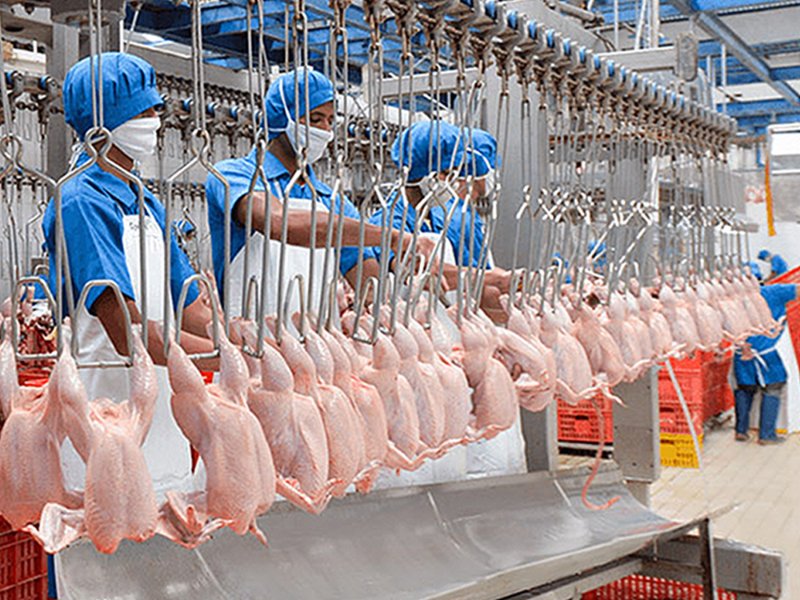
Once slaughtered, the poultry is processed under stringent hygiene protocols. The meat is immediately chilled and then quick-frozen to preserve its nutritional value, flavor, and freshness.
Brazil Poultry Exports uses advanced IQF (Individually Quick Frozen) technology, maintaining optimal temperature control during packaging and transport. This guarantees that the halal-certified poultry remains pure and uncontaminated.
For a full overview of our halal-certified chicken range, explore our Frozen Chicken products page.
5. Certification Audit and Approval
Before export, all production and documentation are reviewed by accredited halal certification organizations recognized by importing countries. These include bodies like JAKIM (Malaysia), ESMA (UAE), and SANHA (South Africa), depending on the destination.
Once approved, each shipment is issued a Halal Certificate and official seal, ensuring it can be exported and sold in international halal markets
Brazil Poultry Exports: Commitment to Halal Integrity
As one of Brazil’s leading exporters of frozen meat, Brazil Poultry Exports has built its reputation on consistency, integrity, and global compliance. Our halal certification process is deeply integrated into every stage of production, ensuring that each product aligns with Islamic principles and international quality benchmarks.
Our Key Commitments Include:
Expanding Beyond Poultry: Halal Standards in Other Frozen Meats
While poultry remains our core expertise, Brazil Poultry Exports also supplies a diverse range of halal-compliant products. Our Frozen Beef and Frozen Pork lines follow similar rigorous hygiene and export standards—meeting the quality expectations of international buyers around the globe.
It’s important to note that pork, while offered for non-Muslim markets, is strictly processed in separate facilities to maintain halal integrity across poultry and beef operations.
This meticulous segregation reinforces our reputation as a trusted and responsible exporter capable of serving multiple market segments with full transparency.
Common Questions from Importers About Halal Certification
1. Can I verify the authenticity of a halal certificate?
Yes. Every halal certificate issued for our frozen poultry shipments is traceable via a unique reference number and authorized halal body stamp. Importers can verify validity through the certifier’s online portal or by contacting their local halal authority.
2. Are all Brazilian poultry exports halal?
Not necessarily. While Brazil is the world’s largest exporter of halal poultry, not all producers are certified. That’s why working with an exporter like Brazil Poultry Exports, which guarantees compliance, ensures you’re sourcing from verified halal facilities.
3. Does halal certification affect product price?
Halal-certified poultry may carry a slightly higher cost due to the additional supervision, manual slaughtering, and certification fees involved. However, this is offset by access to premium halal markets and stronger consumer trust.
4. Which markets require halal certification for frozen poultry imports?
Countries such as Saudi Arabia, Qatar, Oman, Kuwait, Egypt, Malaysia, Indonesia, and South Africa require halal certificates for all imported poultry and meat products
The Global Advantage of Brazil as a Halal Poultry Supplie
Brazil has earned its position as the world’s top exporter of halal-certified chicken, exporting to over 150 countries. Its success lies in a blend of advanced agribusiness, strict food safety laws, and government-supported certification frameworks.
Key advantages include:
- Abundant Grain Supply: Lower feed costs contribute to competitive pricing.
- Modern Infrastructure: High-capacity, automated processing plants.
- Strong Regulatory Oversight: Brazil’s Ministry of Agriculture (MAPA) works closely with halal certifiers.
- Global Logistics: Efficient port systems enable seamless export to Asia, the Middle East, and Africa.
With Brazil Poultry Exports, importers gain the reliability of Brazil’s infrastructure combined with personalized service, halal assurance, and flexible shipping options.
How Importers Benefit from Working with Certified Suppliers
Choosing a supplier that fully understands the certification process for frozen poultry provides tangible business benefits:
- Risk Reduction: Avoid shipment delays or rejections due to missing or invalid certificates.
- Market Compliance: Meet all religious and regulatory import requirements effortlessly.
- Consumer Confidence: Offer your customers verified halal products backed by global standards.
- Long-Term Partnerships: Work with a consistent, transparent, and trustworthy exporter.
By aligning with Brazil Poultry Exports, you not only gain access to premium halal poultry but also a partner dedicated to ensuring smooth trade operations across diverse markets.

Future Trends in Halal Certification and Export
The future of halal certification is evolving rapidly with digital traceability, blockchain verification, and unified global standards on the horizon. These advancements aim to make the certification process for frozen poultry more transparent and tamper-proof.
Brazil Poultry Exports is already embracing digital recordkeeping and real-time verification systems, ensuring that every certificate and shipment can be verified instantly by our import partners.
This commitment to innovation keeps our halal certification process not only compliant but ahead of global expectations.
Final Thoughts: Trust, Compliance, and Global Quality
For international buyers, the halal certification process for frozen poultry is more than a formality—it’s a cornerstone of global food integrity. It ensures that every chicken, every shipment, and every customer interaction is rooted in respect for cultural, ethical, and religious values.
At Brazil Poultry Exports, our mission is to provide the world with premium, ethically sourced, and globally compliant frozen meat products. From Frozen Chicken to Frozen Beef and Frozen Pork, every product reflects our unwavering dedication to quality, safety, and trust.
Whether you are a wholesaler, importer, or retailer, partnering with a certified halal exporter ensures that your business meets the highest global standards—today and for the future.