
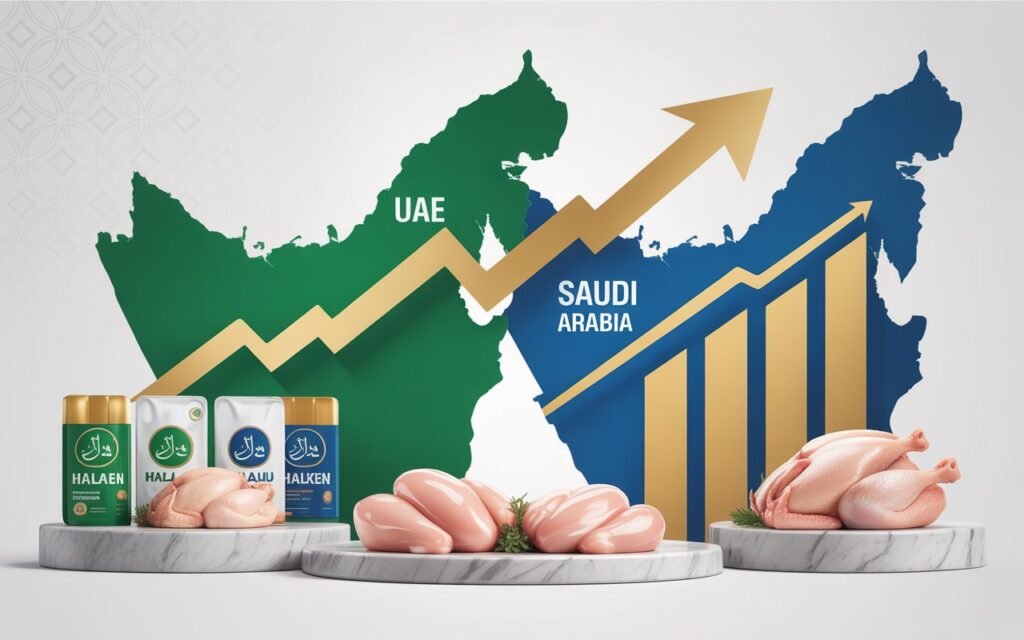
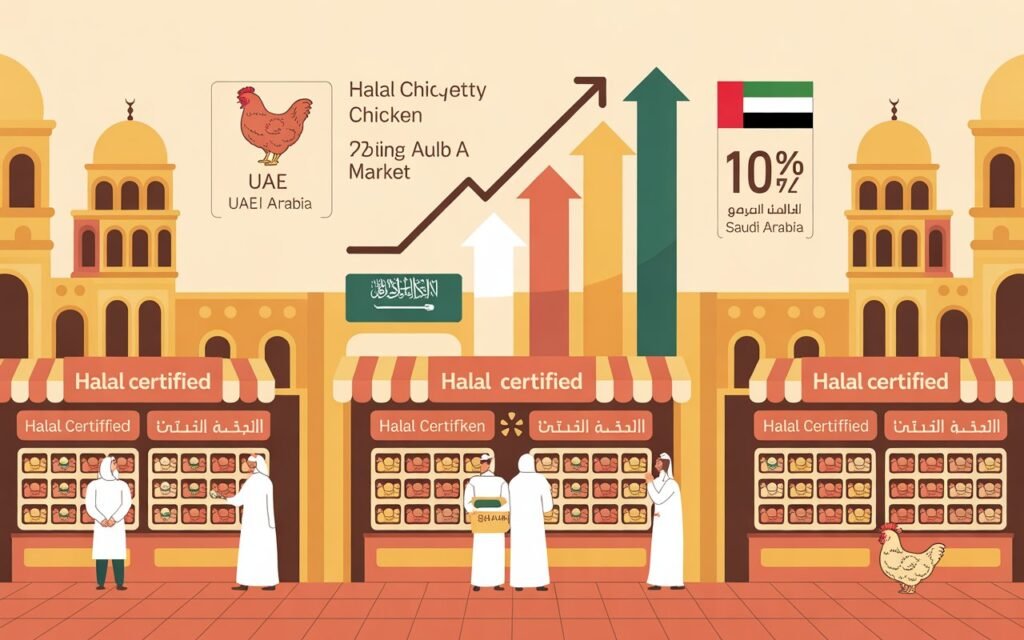
The halal chicken exports to UAE and Saudi Arabia market is one of the fastest-growing segments in the global halal food industry. With rising population, increasing meat consumption, and strict halal compliance laws, both countries rely heavily on imported halal poultry to meet domestic demand.
For exporters, especially from poultry-producing countries, understanding halal standards, certification requirements, cold chain logistics, and market expectations is essential for long-term success.
Growing Demand for Halal Chicken in UAE and Saudi Arabia
UAE and Saudi Arabia are among the largest halal poultry importers in the Middle East. Limited agricultural land and water scarcity prevent sufficient local production, making imports a necessity.
Key factors driving demand include:
-
Rapid urbanization and population growth
-
Expansion of hotels, restaurants, and catering sectors
-
High per capita consumption of chicken meat
-
Preference for certified halal frozen poultry
Countries like Brazil have emerged as major suppliers due to their advanced poultry infrastructure and halal-compliant production systems. Exporters offering reliable supply chains—such as those operating through platforms like
👉 https://brazilpoultryexports.com/ are well-positioned to serve these high-demand markets.
What Makes Chicken Halal for Export?
Halal chicken must comply fully with Islamic dietary laws (Shariah) at every stage of production.
Core halal requirements:
-
Slaughter must be performed by a practicing Muslim
-
Invocation of Bismillah at the time of slaughter
-
Proper blood drainage
-
No cross-contamination with non-halal materials
Halal integrity must be maintained throughout processing, packaging, storage, and transportation.
Halal Certification Requirements for UAE and Saudi Arabia
Halal certification is mandatory for exporting chicken to both countries.
Required certifications include:
-
Halal certificate from an approved Islamic body
-
Veterinary health certificate
-
HACCP or ISO 22000 food safety certification
-
Certificate of origin
Saudi Arabia follows regulations issued by the Saudi Food and Drug Authority (SFDA), while the UAE applies ESMA halal standards. Only approved halal certifiers are accepted by authorities.
Export Documentation and Regulatory Compliance
Accurate documentation ensures smooth customs clearance and avoids shipment rejection.
Common export documents:
-
Commercial invoice
-
Packing list
-
Halal certificate
-
Health certificate
-
Bill of lading
Exporters dealing in frozen halal chicken products must ensure documentation aligns with shipment details, shelf life, and labeling accuracy—especially when exporting products listed under
Packaging and Labeling Standards for Halal Chicken
UAE and Saudi Arabia enforce strict food labeling laws to protect consumers.
Labeling requirements:
-
Halal logo from approved certifier
-
Production and expiry dates
-
Storage temperature (−18°C for frozen chicken)
-
Country of origin
-
Arabic language labeling
Failure to comply may result in shipment delays or rejection at port.
Cold Chain Logistics for Frozen Poultry Exports
Maintaining an uninterrupted cold chain is critical to preserving quality and safety.
Best logistics practices:
-
Temperature-controlled slaughter and processing
-
Reefer containers set at −18°C
-
Real-time temperature monitoring
-
Cold storage handling at ports
Suppliers exporting through reliable halal poultry platforms like https://brazilpoultryexports.com/ often gain buyer trust due to consistent cold chain management.
Market Opportunities for Poultry Exporters
The halal poultry market in the Gulf offers strong growth potential.
High-demand product categories:
-
Frozen whole chicken
-
Chicken breast and leg quarters
-
Value-added halal poultry cuts
-
Bulk supply for foodservice and hotels
Importers prioritize suppliers offering consistent quality, competitive pricing, and certified halal compliance.
Common Challenges in Halal Chicken Exports
Despite high demand, exporters may face challenges such as:
-
Delays in halal certification approval
-
Regulatory changes
-
Port inspection issues
-
Shelf-life compliance
These challenges can be minimized by working with approved certifiers, experienced freight partners, and well-established export supply chains.
Why UAE and Saudi Arabia Rely on Imported Halal Chicken
Due to climatic and agricultural limitations, both countries depend on imports for food security.
Key benefits of imported halal poultry:
-
Stable supply year-round
-
Higher production efficiency
-
Better cost control
-
International quality standards
As a result, halal chicken imports remain a strategic priority for both governments.
Future Trends in Halal Poultry Exports
The future of halal chicken exports is shaped by innovation and consumer awareness.
Emerging trends include:
-
Antibiotic-free halal chicken
-
Sustainable poultry farming
-
Blockchain-based halal traceability
-
Smart packaging solutions
Exporters adapting to these trends will gain a competitive advantage in UAE and Saudi markets.
Final Conclusion
The halal chicken exports to UAE and Saudi Arabia sector offers long-term profitability for exporters who meet halal, regulatory, and quality requirements. With strong demand, strict compliance standards, and evolving consumer preferences, success depends on certification accuracy, cold chain efficiency, and trusted supply partnerships.
Businesses that invest in halal integrity, documentation excellence, and market-specific compliance are best positioned to thrive in this expanding halal poultry trade.